
In the labor-intensive world of construction, it’s common to see workers neglect their most important tool: their bodies. Year after year, the Minnesota Laborers Health and Welfare Fund (MLHWF) saw that preventive care benefits utilization was alarmingly low. When traditional methods failed to persuade members to get their check-ups, the MLHWF decided it was time to take a different approach.
To start, in 2019, the MLHWF examined what was keeping their members from accessing routine care and found that irregular work schedules, dispersed populations, a ‘suck-it-up’ culture, a fear of losing precious work hours and long appointment wait times all played a part. It quickly became clear that the standard healthcare model was failing members, and they needed to build something completely different.
“Our top priority was to remove every conceivable barrier to preventive care,” said MLHWF Executive Director Dave Danley. The vision was to create Laborers-only clinics—medical homes where members and their families could receive same-day or next-day care without co-pays, deductibles or out-of-pocket costs.
If the MLHWF was going to invest in their own clinics, they were going to do it right. They partnered with a third-party organization to run data analyses to inform each decision. That included heat map studies to identify where members lived and sought care, the idea being to bring the clinics as close to members as possible. They selected sites in Eagan, Rogers and Hugo—the latter being a two-minute drive from the Minnesota Laborers Training Center.
In addition to proximity, the fund also prioritized high-touch, Laborer-to-Laborer customer service, a family-friendly atmosphere and stringent data privacy rules. With the list of necessities in order, the next step was to decide how these clinics would be run.
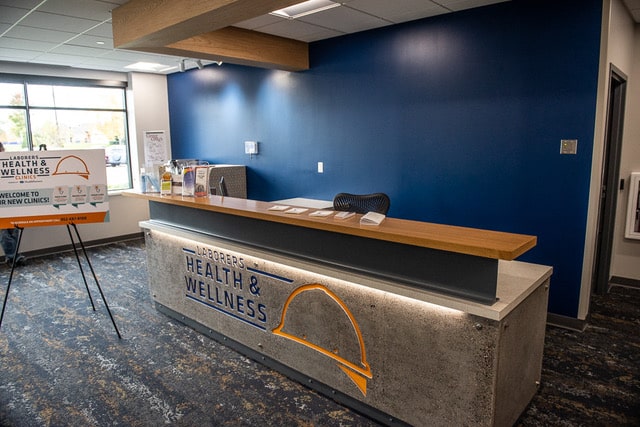
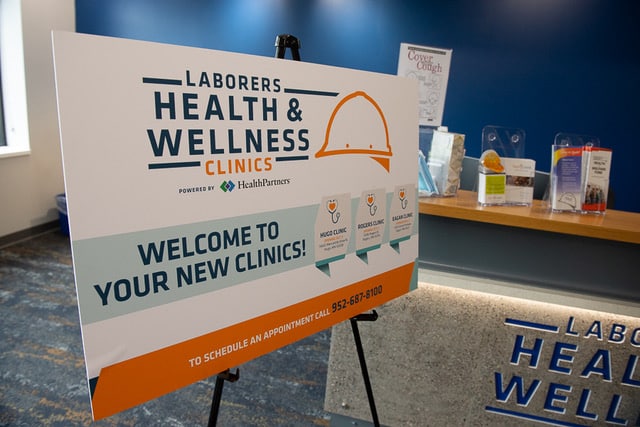
To maintain professional standards while avoiding the logistical struggles of managing a medical practice, the MLHWF teamed up with HealthPartners—a well-respected healthcare organization in the area. This arrangement allowed the fund to own the contracts while HealthPartners handled the practice itself.
HealthPartners staffs each location with its own nurses and practitioners, however Dr. Pfefferkorn, M.D. is the sole doctor on staff and rotates between the clinics. He’s able to treat the clinics as his own private practice, creating the ‘small-town doctor’ feel that so many patients value. He’s the one who takes patients to the exam room and answers their questions when they call. He’s licensed to practice in Minnesota, North Dakota, Wisconsin, Florida, South Dakota, Texas and Arizona, so can also remotely help members and retirees who have relocated to other parts of the country.
During his first year, Dr. Pfefferkorn made it his goal to ensure Laborers live to not only see, but enjoy their retirement. To do so, he tailors his preventive care to their unique needs, sometimes in unorthodox ways like starting many appointments by asking his patient to take their shoes and socks off.
“I know no one wants to ask their doctor about their foot problems, but I see them all the time,” Dr. Pfefferkorn explained, noting that treating simple issues like calluses or fungal infections makes a huge difference in a worker’s daily comfort. “It might feel weird at first, but these guys are on their feet all day, so it’s important to normalize checking.”
The clinics also prioritize joint health and chronic disease management. “The first time I saw a 40-something year old come in with end-stage arthritis, it really struck me,” he said. Since then, Dr. Pfefferkorn has committed to starting the conversation and intervening early, before larger issues arise. This proactive philosophy has also successfully reduced smoking rates through individualized care and on-site access to medications like Chantix.
The fund has continued to solicit, respond to and act on feedback. For instance, when members’ families asked for enhanced pediatric care, the team began seeing children as young as six months old and began offering vaccinations required for school.
Perhaps most impactful, however, is the addition of an in-house behavioral health specialist. After data showed that depression and anxiety were the top two diagnoses among members, the MLHWF immediately sought to find a dedicated mental health professional to work in the clinic. This proved difficult, as mental health benefits are traditionally offered by an employee assistance program (EAP) and they were working with a separate provider. However Danley and his team faced the challenge head on.
“If you say we can’t do it, we’ll get it done,” said Danley. “We said we’re going to build our own clinics, and we did it. So we also found a way to provide this benefit to our people because they needed it.”
In September of 2024, Behavioral Health Therapist Grace Kilgore joined the team. She provides mental health coaching to help patients with immediate or situational needs. And if a patient needs long-term support, she can put them directly into contact with a provider through the EAP and eliminate the red tape. Having Kilgore in house, Dr. Pfefferkorn explains, is a great way to connect reluctant patients with mental health care, because it eliminates barriers and comes from a trusted source.
The primary goal, Danley says, is to continue refining their clinics to best serve their members. Their core mission will always be to create a medical home where Laborers feel comfortable seeking help for their physical and mental needs. Looking ahead, the MLHWF is considering ways to mobilize and bring health care directly to jobsites.
For other funds looking to follow suit, Danley offers simple advice: identify your problem. While this was the best solution for his health and welfare fund, it might not work for someone else’s. He encourages every fund to do what works best for their members.
“We’re really fortunate that we were able to open our clinics and address a problem that was affecting our people,” said Danley. “It’s difficult to quantify the benefits of a program like this, but since opening our doors, we’ve either broken even or saved money every year. Even more importantly, we’ve seen more Laborers getting primary care and living healthier lives—meaning we achieved our goal.”
[Hannah Sabitoni]
