
United Cleanup Oak Ridge LLC is the lead environmental cleanup contractor at the Department of Energy’s 32,000-acre Oak Ridge Reservation in east Tennessee. Tasked with performing some of the most high-hazard cleanup work in the U.S. on a 15-year, $8.3 billion contract, the company has made it a priority to build a world-class safety culture that protects its workforce and helps attract and retain top talent.
That effort has paid off—this LIUNA signatory contractor has won USA Today’s Top Workplaces USA Award three years running. When workforce surveys revealed that employees wanted more resources around mental health, it’s no surprise that UCOR took action to ensure their teams stayed mission-ready. The company launched its Mental Wellbeing Center—a dedicated space with full-time staff that employees could visit during work hours.
“An ‘all injuries are preventable’ safety philosophy has always been at the core of UCOR’s Cleanup Today for a Nuclear Tomorrow™ initiative, so we’ve expanded that emphasis to include a mental health component with onsite staff and resources,” says UCOR President & CEO Ken Rueter.
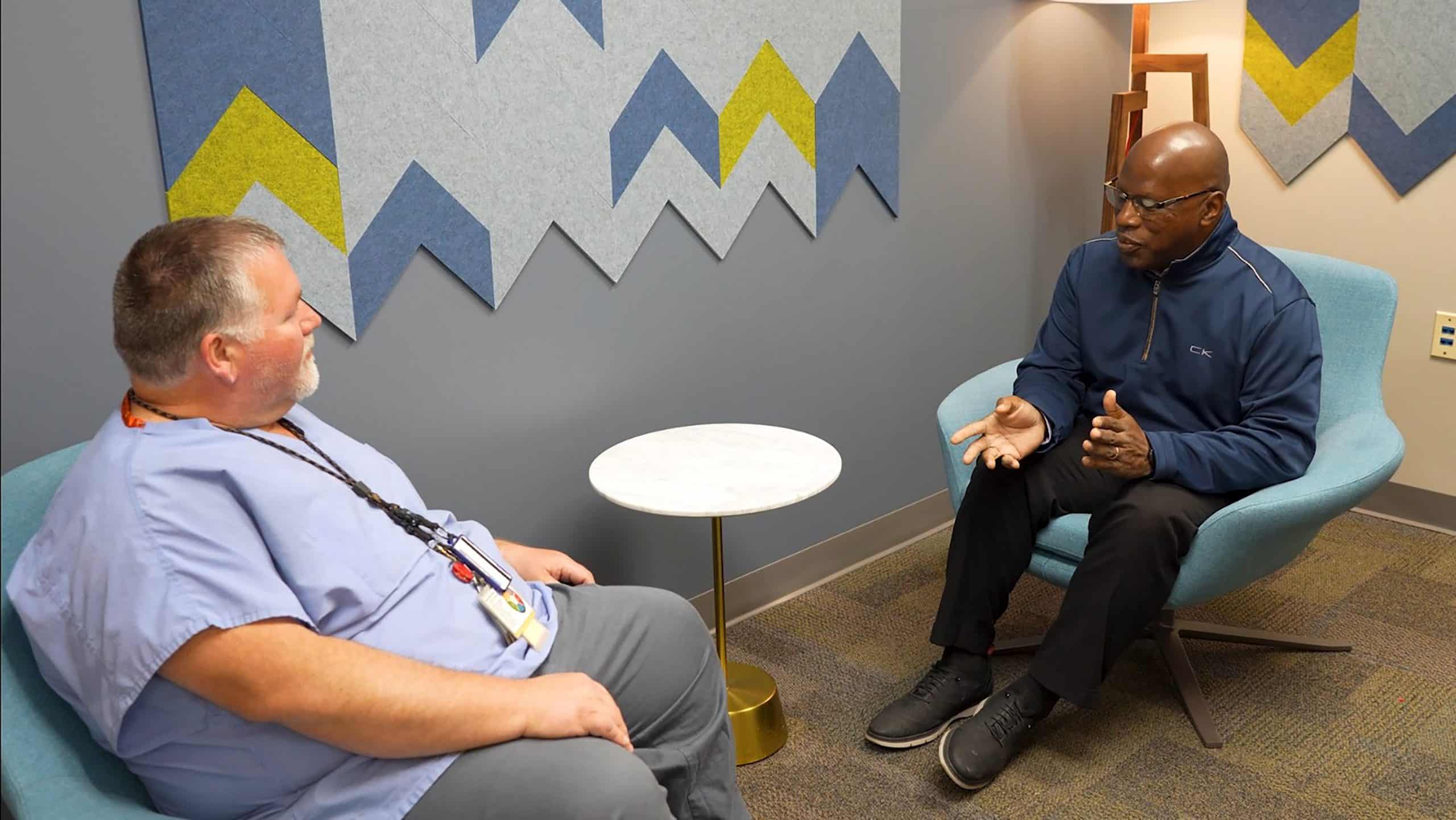
Nearly a year after the Center opened the doors, we sat down with Navigate Program Manager Graeme Parsons and UCOR Wellbeing Counselor Kenneth Williams to find out what they’ve learned and how the initiative has grown.
“The response has been incredible. There are so many different life challenges that affect how we show up at work,” said Parsons. “We have people coming in to talk about marital issues, about their grief after a loved one’s passing. The Center gives us a way to engage with workers on their terms.”
UCOR has a 2,500 person workforce (around half of which is skilled labor), and since the Center opened in February, about 115 different employees have attended more than 430 sessions. The Center’s utilization rate of 6.5 percent is about five times the rate for the Employee Assistance Plan (EAP) available through UCOR workers’ health benefits.
One of the reasons utilization is so high is that UCOR has built the Center around the realities of shift work and the needs of its workforce. That includes after-hours availability, no need to file a claim with insurance and the ability to receive up to seven sessions per life event.
“We try to help workers learn to cope with life, learn to focus on the moment and give them a sense of hope,” said Williams. “The first step is knowing they can say anything in this room and won’t be judged. Many of us may not have a place in our lives where we can do that. The Center gives workers that space.”
UCOR’s metrics show the Center is delivering a 4:1 return on investment through worker retention and recouping lost productivity. Direct impacts also include:
Most importantly, 100 percent of visitors report improved wellbeing after their session.
One of the most impressive aspects of the Center is how quickly UCOR built trust with its workforce. We know that reducing the stigma of asking for help can be tough. How did UCOR get workers to actually show up to its new Wellbeing Center?
“We had around 30 face-to-face meetings across the entire reservation,” said Parsons. “We explained how the Center would work, along with time for questions about concerns such as privacy and confidentiality. We knew safeguarding confidentiality was critical to building trust and worked hard to ensure utilizing the Center was kept secure and private.”
UCOR also took steps to make workers comfortable visiting the Center by locating it near their medical facilities on its main campus, and having a separate entrance and exit so workers don’t pass one another as they’re coming in for a session.
According to Parsons and Williams, another part of reducing stigma around using the Center was a subtle but powerful choice in the language being used. Instead of calling it a mental health center, UCOR emphasized it as mental wellbeing.
“Mental wellbeing is not about diagnosing illness, it’s about coping with life,” said Williams. “That concept gives workers more leeway to be honest. They don’t come in saying ‘I’m depressed.’ They come in saying ‘I feel off’ or ‘I can’t focus at work.’ We start the conversation from there and talk about their goals. There’s a lot you can do in seven sessions.”
The result? Employees are reporting better wellbeing and a newfound appreciation for a company that genuinely cares about them.
“People come in for the first time and they say, ‘Why in the world does my job care about my marriage or my kids?’” said Williams. “It’s part of UCOR’s Culture of Caring. And it goes a long way with workers to see that.”
Going forward, UCOR is already considering adding a second counselor. That would allow the Center to expand its group-based sessions and to continue hosting workshops, which they’ve recently added and received positive feedback on.
“We started a six-week support group on grief, and another on elder care,” said Williams. “We’re able to lead the discussion and let the group talk openly, surrounded by their peers going through a similar experience.”
Beyond growing support group and workshop offerings, UCOR is also exploring options to add telehealth and offer services to workers’ family members. They’re also fielding requests from other DOE sites interested in bringing similar programs to their own workforce.
Organizations looking to bring similar wellbeing support to their workers can learn a lot from UCOR, even if they don’t have the resources for full-time staff or a static location to open their own Center.
Consider these core principles:
If UCOR has proved anything, it’s that workers will show up when the support is authentic, accessible and free of stigma. And once they show up, UCOR is there to help—one conversation at a time.
[Nick Fox]
